

Early literacy is one of the most critical foundations we lay in early childhood education, yet it's also one of our most pressing challenges. Recent data reveals a sobering reality: nearly 40% of fourth graders in the United States are not reading at grade level. Even more concerning, children who aren't reading proficiently by third grade are four times more likely to drop out of high school.
The problem begins long before Kindergarten. Research consistently shows that the achievement gap in literacy is already present when children enter school, with disparities often linked to socioeconomic factors, access to books, and the amount of language exposure children receive at home. By age three, children from lower-income families may have heard 30 million fewer words than their more affluent peers. That’s a gap that's nearly impossible to close without intentional, engaging early literacy interventions.
But here's what we know with absolute certainty: early childhood educators have an extraordinary power to change this trajectory. Between the ages of 0-5, children's brains are uniquely primed for language development. During this time, positive experiences with books and reading can spark a lifelong love of literacy.
When we make reading exciting, magical, and deeply engaging for young children, we're opening doors to their entire educational future. Not to mention, of course, the more obvious support in helping them with language acquisition and reading comprehension.
The challenge is not just teaching literacy, but fostering a desire to read, especially against competition from screens. Early educators need creative, budget-friendly, community-centered approaches to make books irresistible. That’s where the Storybook Forest comes in.

The Solution: Enter the Storybook Forest
I recently visited an elementary school with an idea I absolutely loved—it's called a Storybook Forest. Let me break down how it works and share how early educators can use the same concept to make reading even more exciting and magical for preschoolers and toddlers.
The concept is simple and still impactful: turn your learning environment into a woodland of literary wonder, where each tree represents a different beloved book. It's immersive, it's visual, and brings books to life, allowing children to experience the stories beyond the confines of what’s on the page.
How It Works
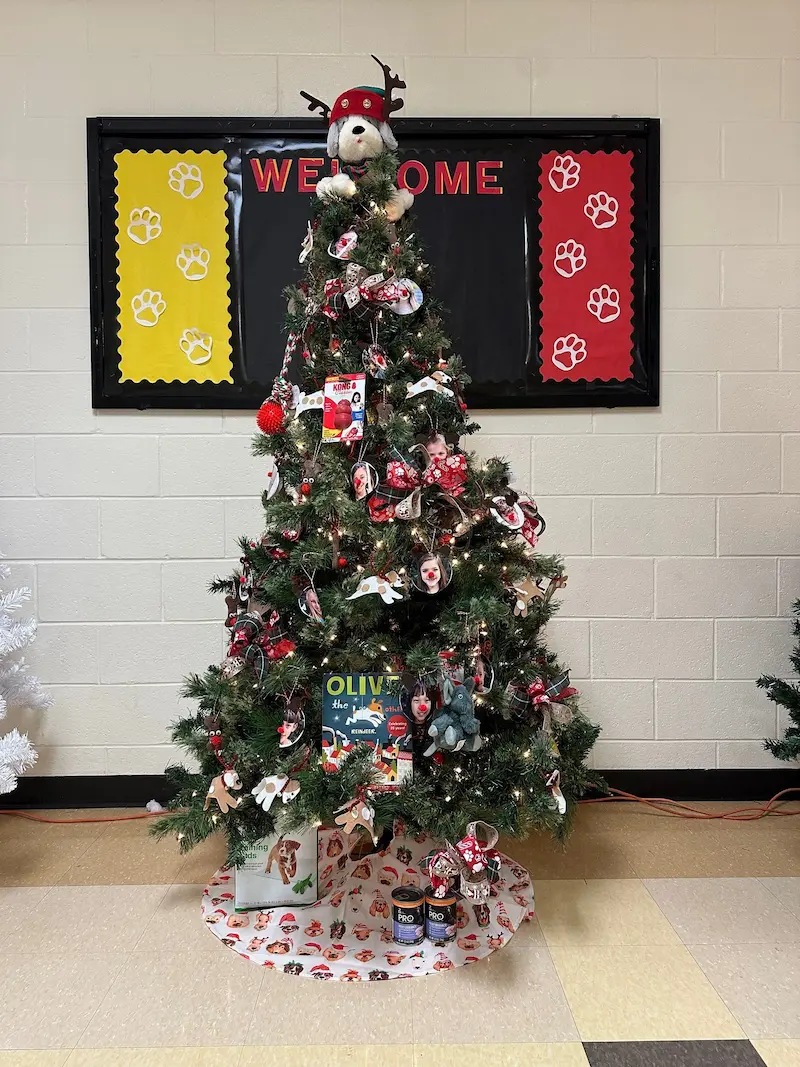
In the school I visited, the Storybook Forest had become an annual tradition that the entire community looked forward to. Every year, each class chose a book and created an ornament based on that story. Then, volunteers decorated an entire tree around that book's theme.
Picture a tree adorned with mittens and snowflakes for The Mitten, or one covered in colorful dots and circles for an Eric Carle book. All these themed trees were placed throughout the halls, creating an actual "woodland" that children walked through daily.
But the magic didn't stop with the decorations. Throughout the month, local "celebrities" would visit to read to the classes. These beloved VIPs included previously retired teachers, school administrators, the mayor, local coaches, and other community figures. When the month ended, some trees were donated to families or community organizations, while others were carefully stored for the following year. At this particular school, they'd developed a beautiful partnership with the nearby high school Beta Club, whose members helped set up and decorate the trees each season. The high schoolers had an absolute blast stringing lights and decorating for the younger children—a genuine win-win that built connections across age groups and gave teens meaningful service opportunities.
How You Can Take This Idea and Run With It
What I love most about this concept is that it's low-cost, high-impact, and incredibly flexible. You can adapt it to fit virtually any program, budget, or space constraint.
Getting your trees
You can usually find artificial trees on clearance in January or discover great deals on Facebook Marketplace. You might even put out a call to families for donations—many people have small artificial trees tucked away in storage that they'd be happy to contribute to a meaningful cause.
But here's the beautiful part: you don't even need to use literal Christmas trees. This could be just as effective with mini-trees, decorated boxes, bulletin boards, or even large pieces of craft paper rolled out and decorated as "trees" on your walls.
Choosing your books
The key is featuring a different book on each tree or display area. Each classroom can select a book, ideally choosing from titles you already have available in your program. This approach helps tremendously with decision fatigue—instead of overwhelming teachers with endless options, you're working with familiar favorites that you know resonate with your students.
Another idea to help limit decision fatigue might be to focus on only one author. There are many prolific children’s authors who have enough titles that all your classrooms can still choose from their work. Authors like Mo Willems, Jan Brett, Mark Teague, Eric Carle, Bill Martin Jr. are good examples.
Making it work for your space
Consider having each class host a small themed tree or display in their room for a week. Where does it lives in that space? Trust your staff to decide. They know their room layouts, their students' traffic patterns, and what will work best for their particular group of children.
Connecting to your community
One particularly meaningful twist I observed was connecting the trees to fundraisers or awareness initiatives. In the school I visited, one classroom featured Olive, the Other Reindeer by J. Otto Seibold, and collected donations for the local animal shelter that were placed under their tree. This approach teaches children that reading connects to the real world and that stories can inspire us to help others.
Book Recommendations for a Winter Theme
If you're creating a Storybook Forest during winter months, here are some titles to consider:
- There Was A Cold Lady Who Swallowed Some Snow! by Lucille Colandro
- The Jacket I Wear In the Snow by Shirley Neitzel
- The Snow Day by Ezra Jack Keats
- Polar Bear, Polar Bear, What Do You Hear? by Bill Martin Jr.
- The Snow Thief by Alice Hemming
Each of these books offers many opportunities for themed decorations, from snowflakes and winter clothing to arctic animals and mysteries.
Beyond Winter: Other Storybook Forest Ideas
Don’t limit yourself to winter! A Storybook Forest works for other celebrations and awareness periods throughout the year. Here are some ideas to get you started:
Black History Month (February) – Feature books written by Black authors or that celebrate Black experiences and contributions. This approach centers diverse voices and helps all children see themselves and others reflected in the literature they encounter. I recommend checking out Black Children’s Book Week for more ideas and tips!
Read Across America Week (March 2-6) – Do you already decorate for this literacy awareness week? A Storybook Forest might be a perfect way to take your celebration to the next level, creating an immersive experience that makes the entire week feel extra special.
Week of the Young Child (April 11-17)– Each tree could represent one of the daily themes that NAEYC designates for this special week. This creates a cohesive celebration while highlighting the diverse ways children learn and grow.
Earth Day (April 22) – Use books on different environmental topics. Each tree could represent a different aspect of caring for our planet: recycling, protecting animal habitats, water conservation, or planting gardens. Imagine trees decorated with paper leaves, recycled materials, or representations of endangered species.
Storybook Forests are flexible enough to align with whatever your program is already celebrating!
Making the Magic Happen
Beyond the physical setup, consider these elements that can make your Storybook Forest even more impactful:
Invite community readers, just like the school I visited did. Reach out to local business owners, retired educators, faith leaders, librarians, or even older students from nearby schools. These special guests add an element of anticipation and show children that reading matters to the whole community, not just to teachers.
Create interactive elements around each tree. Perhaps children can write or dictate their favorite part of the featured book, which then gets displayed on the tree. Or maybe they can create their own ornaments inspired by the story. The more children can participate in building the forest, the more ownership and excitement they'll feel.
Document the experience. Take photos of children with each themed tree and create a digital or physical album. This documentation serves multiple purposes: it gives families a window into your program's activities, it creates lasting memories for children, and it provides you with material to share when recruiting volunteers or seeking support for next year's forest.
Host an open house. Bring families together and ask them to observe the trees. Do you have extra copies of the books that they could “check out” and read at home? Consider sharing a flyer with tips on how to enrich storytime at home by asking children to predict the story, or ask open-ended questions to help kids think more deeply about the book.
Bringing It All Together
At its heart, the Storybook Forest concept recognizes a fundamental truth about early childhood education: children learn best through experiences that engage their whole selves - their imaginations, their senses, their emotions, and their connections to community.
When literacy goes beyond worksheets and flashcards to an immersive, celebratory experience, we're teaching children that books are treasures worth celebrating, that stories connect us to each other, and that reading is magical.
In a time when literacy statistics continue to concern us, when screens compete for attention, and when resources often feel stretched thin, ideas like the Storybook Forest remind us that some of the most powerful educational interventions don't require expensive curricula or high-tech solutions.


Free downloadable Early Childhood resources
Explore our library of longer-form books, guides and editable templates - all free to download.
Explore free resources