


Many experienced educators are leaving the field, taking with them years of wisdom and care that have shaped countless children’s lives. That’s why, whether we’re welcoming someone brand new to early education or a seasoned teacher joining a new center, the goal is the same: helping them feel grounded, valued, and supported from the start.
For directors and leaders, that means taking a truly human-centered approach to teacher preparation and onboarding - one that sees each educator as a whole person, not just a new hire.
When we build from their strengths, offer meaningful opportunities for practice, and help them grow through reflection, we set them up for more than just short-term success. We build the foundation for long, joyful, and impactful careers in early education.
Success Tip #1: Build from Strengths
Before we can build others up, we have to pause and reflect on our own purpose. What does success look like for your teachers, and for the children and families you serve? A clear, meaningful vision rooted in your center’s values should guide every decision you make as a leader.
When new teachers join your community, their first few weeks shape how they see themselves and their role. Do they feel welcomed, seen, and valued? Are you designing experiences that help them connect their personal strengths to the school’s vision?

By identifying and building from their strengths, we can nurture confidence that leads to higher motivation, deeper engagement in professional learning, and stronger classroom performance.
New teachers naturally receive a great deal of feedback, which can sometimes feel overwhelming or discouraging. Even teachers with years of experience can struggle with confidence in a new environment. Instead of focusing only on what they need to “fix,” highlight what they’re already doing well. Reflect back their strengths, celebrate progress, and show them how those strengths can grow. When we start from what’s strong instead of what’s wrong, we build confidence, engagement, and trust - the foundations of lasting success.
Success Tip #2: Practice, Practice, Practice
Growth takes practice and time. For early childhood leaders, that means designing professional learning experiences that go beyond checklists and one-off trainings. Ask yourself:
- What do we want our teachers to experience in their learning?
- How will those experiences translate into the joyful, intentional classrooms we want for children?
Just like our youngest learners, teachers thrive with hands-on, play-based learning. Consider building consistent, structured opportunities that allow them to practice what effective teaching looks like, sounds like, and feels like, like a coaching session, a peer observation, or even a role-play during a staff meeting.
Think of how medical residents train through clinical experiences. Prepping new teachers is similar. Instead of expecting mastery right away, we offer repeated, supported chances to practice. When teachers have time to practice their craft, they are more confident, prepared, and resilient in real classroom settings.
Success Tip #3: Address Bias and Limiting Beliefs
Even the most passionate educators can fall into biases and limiting beliefs about themselves, their students, or what’s possible in their classrooms. Sometimes these thoughts sound like:
- “I’m not a good teacher.”
- “My children come from poor backgrounds, so they’ll always be behind.”
These beliefs often show up subtly in expectations and routines, and can hold both teachers and children back.
As leaders, we can help shift those narratives. Encourage teachers to reflect on where those beliefs come from and replace them with empowering ones, like:
- “My children can and will learn.”
- “I am the best teacher for my children.”
- “My students’ backgrounds enrich, not hinder, their learning.”
Creating a culture where teachers can safely talk about these thoughts, reflect, and grow together is essential. Coaching, open conversations, and modeling vulnerability all play a role in helping teachers see their full potential.
Conclusion: Building a Foundation for Success
Supporting new teachers isn’t just about helping them survive their first few weeks. It’s about helping them belong and thrive for years to come.
When early childhood directors and school leaders commit to building from strengths, creating opportunities for meaningful practice, and challenging limiting beliefs, we nurture educators who are confident, reflective, and resilient.
Investing in our teachers - whether they’re brand new or bringing years of experience to a new home - means investing in the children and families they serve. When we get that right, we don’t just prepare teachers, we strengthen entire school communities.
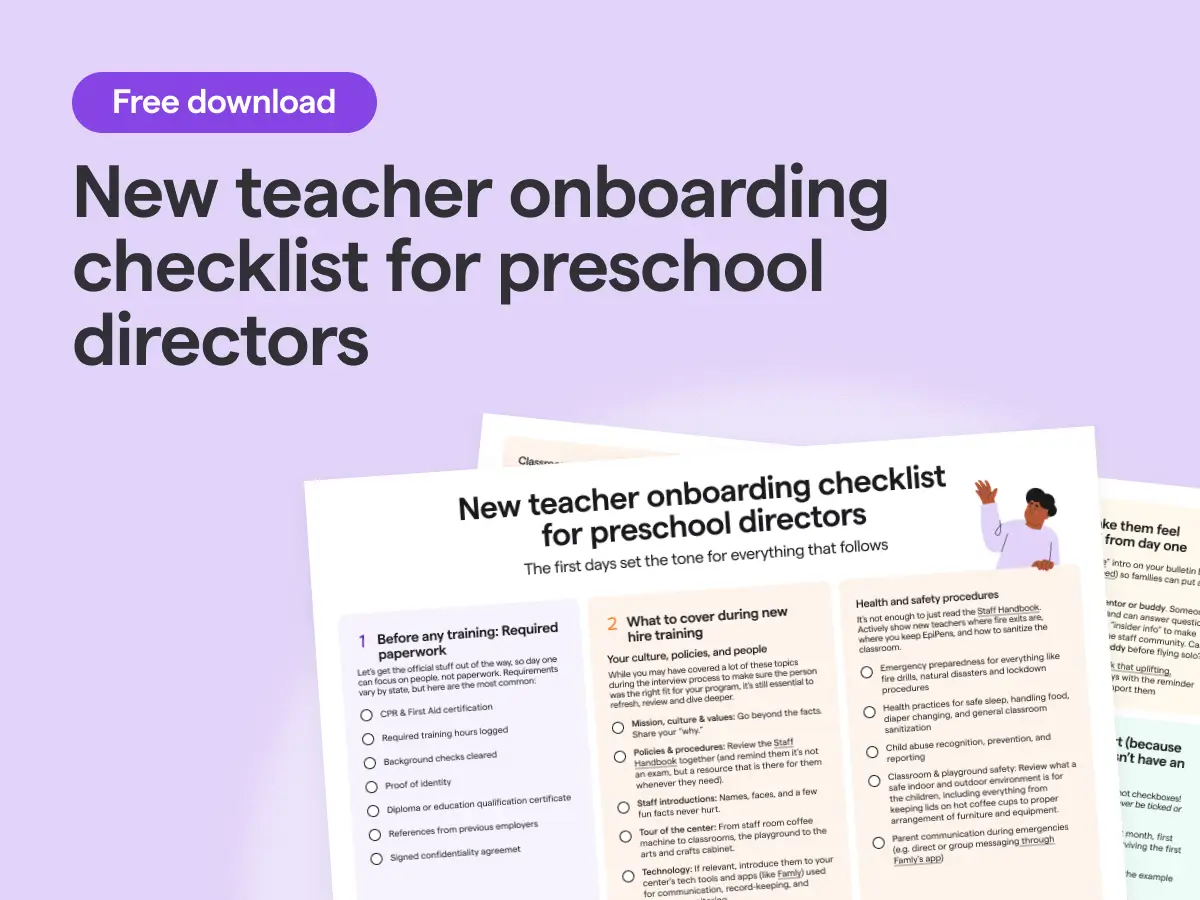
Need a checklist to keep track of the practical to-dos, while you focus on setting the individual staff member up for success? We got you covered.
%20(1).webp)

Free downloadable Early Childhood resources
Explore our library of longer-form books, guides and editable templates - all free to download.
Explore free resources