
.webp)
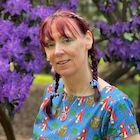
Trisha Lee is the founder and artistic director of Make Believe Arts, a theatre and education company, and the charity behind Helicopter Stories. Trisha created MakeBelieve Arts in 2002, based on the idea that “story has the power to change lives”. She is a writer, a speaker, a trainer, and is a trained secondary school drama teacher although now the children she works with are mostly in the Early Years. Tricia achieved a Master’s in Writing for Young Children (you can find her books on her website) and has now worked in the Early Years sector for 24 years.
Trisha Lee explains that Helicopter Stories are based on the work of American practitioner Vivian Gussin Paley, who believed every child has a story to share within their community. In fact, she named the approach after a book by Vivian Gussin Paley, The Boy Who Would Be a Helicopter.
But story time is a pretty standard part of Early Years provision, so what makes helicopter stories any different?
Read on to find out...
Everyone has the opportunity for storytelling and story acting, as well as being an audience member, so all children feel included.
"By writing, what we're doing is valuing the child's words, but also the cadence, the rhythm of the way that children speak. We actually really listen to them. And it's quite special, I think."
Trisha Lee, Founder and Artistic Director of Make Believe Arts
Children have natural storytelling abilities and should be given agency in how they share their stories. The approach emphasises accepting children's words exactly as spoken, without grammar correction, to preserve their unique expression and poetic qualities.
Trisha explains the importance of maintaining a list of children who've told their stories (and who haven't). The adult asks each child if they want to tell a story, respecting their right to say no. She emphasises the importance of continuing to offer opportunities to all children, even those who initially refuse or are less verbal.
"It's validating children's place within the community of the classroom as well, within the group. Other children see that we value every story, which is so important."
Trisha Lee, Founder and Artistic Director of Make Believe Arts
Helicopter Stories create an inclusive classroom community where children act out each other's stories regardless of personal relationships or differences. The methodology promotes equal participation and builds emotional intelligence through role-playing.
Trisha has been working to support more neurodivergent and disabled children to access helicopter stories by, for example, using PECS instead of speech to tell the story.
"This approach works for all children because it meets children where they are. It's not trying to go, 'This is what the story should be.' It's going, 'What's your story?' And children have just been waiting to be asked that. The minute you ask that question, they've connected. It's brilliant."
Trish Lee, Founder and Artistic Director of Make Believe Arts
Educators must reflect on their own reactions and trust children's capabilities rather than imposing adult perspectives or limitations. Success requires letting go of control and accepting that adults don't need to have all the answers. Trust the children's imaginations!
It's not just about speaking and listening skills, helicopter stories can support social and emotional development, too. The storytelling format provides a safe way for children to process challenging topics like death or tragic events in an Early Years-appropriate way. The structure allows children to approach difficult subjects at their own comfort level, with the support of the adult story reader.
"I've had stories where a child's told their dad died," says Trisha, "And they actually told the story of the funeral, and then the class acted that out."

Start listening now


