
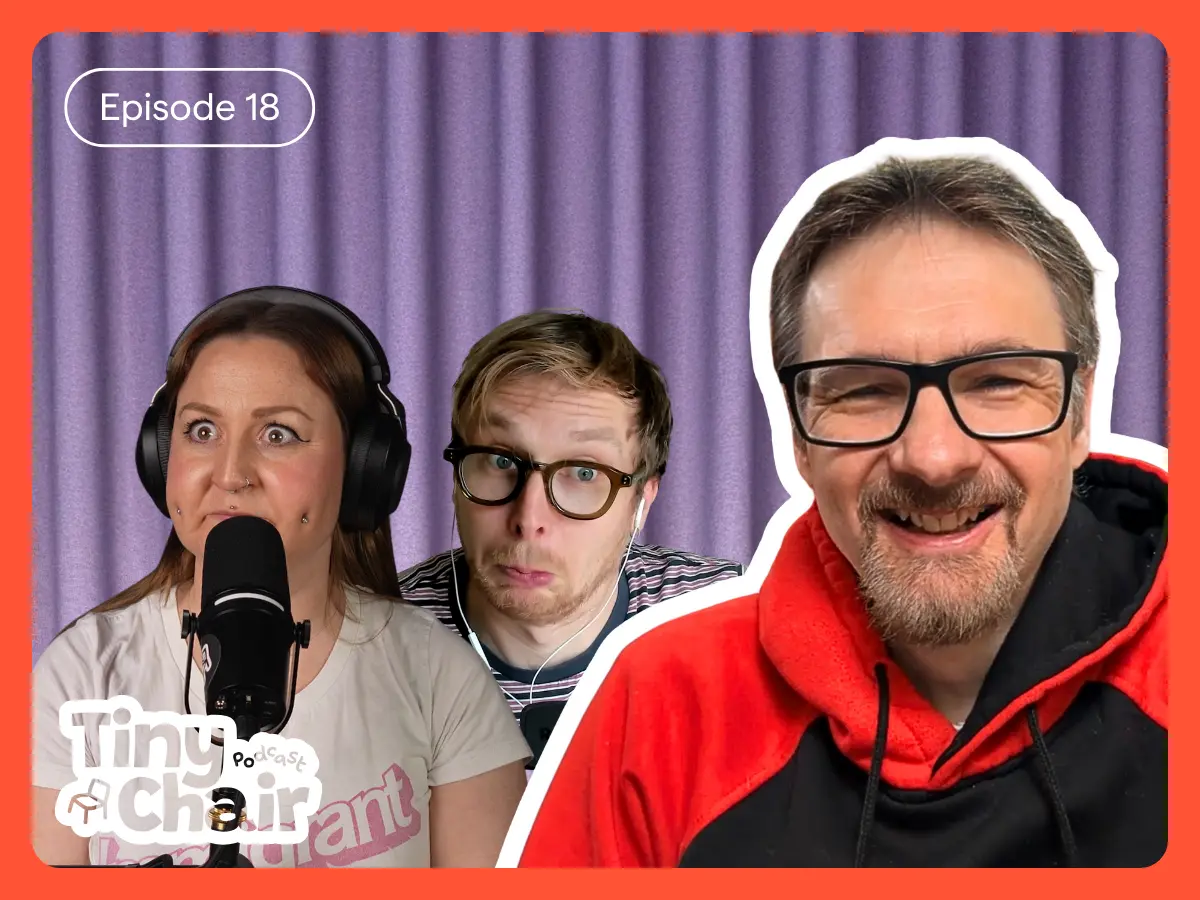

Ben Kingston-Hughes, is the director of Inspired Children, and has over 30 years of experience working with young people. He is a trainer, speaker, and author, and has written everything from books to strategies for Local Authorities to articles for Nursery World. He is the winner of the 2019 National Playwork Awards Training Award and was a finalist for the Nursery World Trainer of the Year in 2020. His latest book "Why Children Need Joy" was also a finalist for the Nursery World Best Professional Book award in 2024.
The relationship between play and learning is fundamental, with play being the primary mechanism through which children learn, form attachments, and develop healthy brain growth. When play is allowed to be free exploration rather than adult-directed, it leads to creative problem-solving and significant development.
"Seeing play as a break from learning is the wrong idea, isn't it? Play is the primary way in which children learn. It's the primary way in which they form attachments. It's the key criteria for healthy brain growth. It's all of these things and more. It's about recognising that the learning does come through play, not when the play stops."
Ben Kingston-Hughes, Inspired Children
A significant concern is adults being "too adult" in their interactions with children, including dismissive attitudes and failing to provide appropriate emotional nurturing through basic actions like smiling. There's a problematic tendency to talk to children in ways adults wouldn't speak to other adults, highlighting issues around respect and dignity.
"I work with nursery settings where they're crawling around on the floor being a dinosaur with the biggest grin on the face with children climbing all over them. And that is amazing. And then you'll go to a school or a nursery where it's just not like that. It's like the children are an inconvenience. It's like they're the part of the job that you wish you could do without. And obviously you can't, can you?
And I do believe that even if you're struggling, you need to put on that face for the children. I think even when you're not feeling the happiness, sometimes you've really got to push it because otherwise you're telling those children fundamentally, "You're not important". So, yeah, that's my biggest ick. It's adults who are too grown up about working with children."
Ben Kingston-Hughes, Inspired Children
Creating environments of joy requires attention to both children's and educators' wellbeing. For educators, maintaining joy involves supporting each other's mental health and remembering their core purpose. For children, joy comes through feeling nurtured and having their curiosity engaged through playful approaches.
"Try to make your setting a culture of laughter and joy with the adults, not just the children. And you will improve your own mental health, but you'll also be helping each other. Keep reminding yourself why you do the job in the first place."
Ben Kingston-Hughes, Inspired Children
Ben argues that educators should worry less about learning outcomes and focus more on creating positive experiences for children. He explains that we should always be prioritising the experience of learning, which can lead to better implementation and engagement, especially for neurodivergent children.
Ben believes that setting "artificial failure thresholds" can exclude children and diminish engagement. As a sector, we should judge the success of a learning experience by how engaging and accessible it is, rather than whether it achieved a learning goal.
"It's worrying about outcomes. That is the biggest problem, and that's what's led us to almost forget what childhood is about. Because we're so focused on the learning, we're actually stopping it being about the experience."
Ben Kingston-Hughes, Inspired Children

Start listening now


