
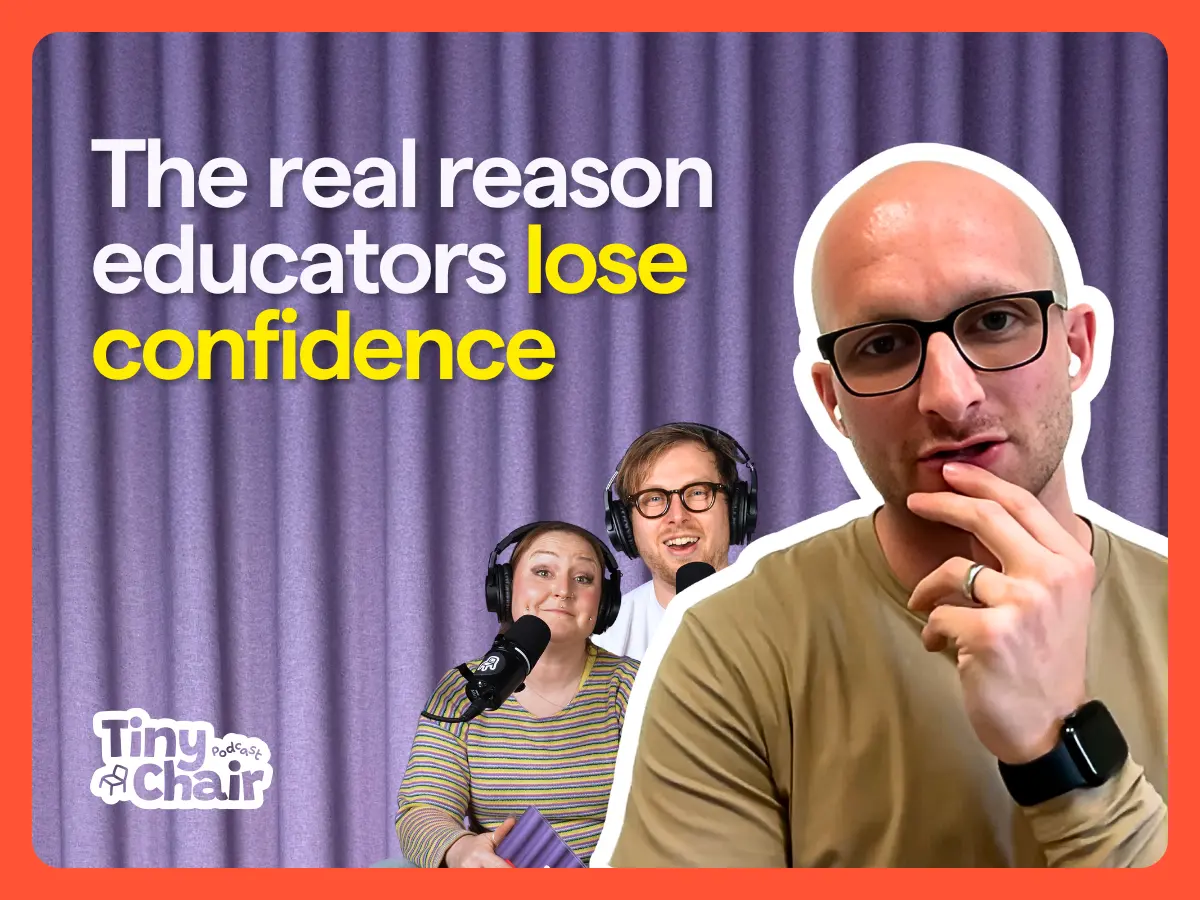

Dr Lewis Fogarty is a lecturer in Education At Brunel University and one half of the duo of directors at Always Growing. They have four settings across Berkshire and Middlesex, and are famous for their 4POP pedagogy. He is also a trustee of TACTYC, The Chair of the Board of Trustees of the charity ConnectED AND is the founder of Edventurous Leadership. Lewis is now a published author; his book, “10 Principles for Professional Confidence in Education: The transformative power of believing in yourself” is out now.
Lewis describes professional confidence as the belief individuals hold in their:
It encompasses whether they feel they have something valuable to say, the space to say it, and whether they feel valued. Lewis believes this is central to educator wellbeing, practice quality, and retention. Essentially, those who are professionally confident are seen as better educators and more likely to remain in the sector.
Lewis explains that confidence is a skill to be developed incrementally rather than a fixed trait. Action, however small, is the primary driver of growth. So what actions should you take?
As a leader, you're role-modeling all the time, whether you realise it or not. The standard you walk past is the standard you set. So if you aren't going to tackle something directly, how can you expect your team to do that?
Lewis Fogarty
Lewis believes that leadership culture directly shapes the confidence of educators. He recommends leaders adopt a genuine open-door policy, practice role modelling, and respond appropriately to feedback.
I'm a big believer in like bottom-up transformation. For me, the people that know the children best are the teachers, are the educators. Therefore, their views on what the setting needs next surely should count more than the managers and the owners. Of course, there's other factors that the team may not be aware of— budgetary constraints, other things happening down the line. But for me, their voices, those on the ground, absolutely needs to be part of the conversation. Otherwise you're missing such a valuable insight that you can get.
Lewis Fogarty
Conversely, tokenistic listening, power dynamics that go unacknowledged, and leaders who do not model direct communication all contribute to the eroding of educator confidence.
It all starts with relationships, says Lewis. The quality of relationships between leaders and educators will determine how effective feedback is. If you have already established trust, feedback lands better, and confidence is better preserved when feedback is given.
But that's easier said than done.
Lewis has observed that, while most educators say they want direct feedback, they find it really hard to give direct feedback to others.
People don't speak to the person they need to speak to. They talk to somebody else, and then they've done two things. They've not tackled the issue head-on, but they've also burdened someone else with the weight of that issue. And then there's - and I find this quite challenging sometimes - where someone comes to me with an issue about someone else. If I go to that person, it disempowers the person that brought it to me, and you almost wish that person just went direct to them.
Lewis Fogarty

Start listening now


