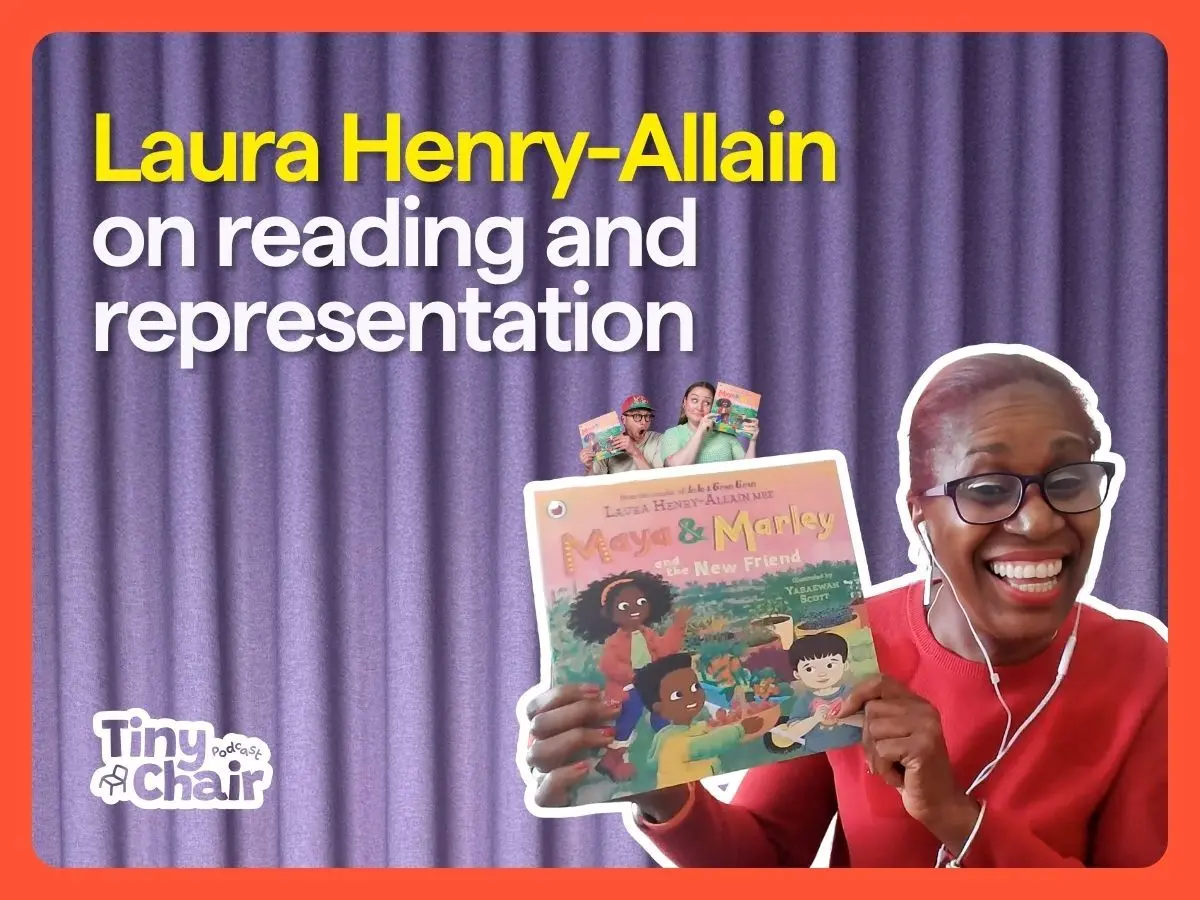
Laura Henry-Allain MBE is an award-winning international educator, author, speaker, and consultant. She knows Early Years inside out and has been everything from a nursery manager to an Ofsted inspector, and is vice-president of The British Association for Early Childhood Education. Laura received a Nursery World lifetime achievement award in 2021. Laura also plays many roles in children’s media, including educational consultant for the BBC and board member for The Children's Media Foundation. She is also the mind behind, “My Skin, Your Skin”, “Maya and Marley”, and “JoJo and Gran Gran”. Laura is a patron of the Grenada Community Library and Expert Commissioner on the ‘Raising the Nation’ Play Commission’s national inquiry into play. She was awarded her MBE in the Queen's New Year Honours list in 2021 for services to education.
Laura describes books as foundational to early childhood development, covering all of the EYFS seven areas of learning, and serving as a gateway to emotional, cognitive, and cultural growth.
Laura emphasises that every child deserves access to books regardless of location or financial circumstance, but recognises that some settings lack sufficient books due to budget constraints. To make book budget go further, Laura suggests
And books aren't just for the "reading corner" or the carpet. Laura says books should be displayed throughout the entire setting (including entrances and outdoor areas) so children can self-select and develop independent reading habits before reaching reception.
However, it's not just story books that count. Laura reminds us that non-fiction books are an undervalued but equally important resource, supporting factual learning and broadening children's understanding. You can also offer comics, magazines, dual language books, and audio books, as these support engagement, imagination, and listening skills.
Diverse and inclusive books are presented as essential for all settings, not just those in multicultural areas, as they build children's awareness of the wider world and strengthen self-esteem and cultural capital. Laura explains Dr. Rudine Sims Bishop's mirrors, windows, and sliding glass doors framework to illustrate this:
Laura advises that it's best to have a balance between books that explicitly address topics such as racism or family structures and those where diversity is naturally embedded in the background of the story.
Laura recognises that some educators may feel uncomfortable reading books that address sensitive topics such as racism, feelings, or family diversity. In Laura's books, she offers practical support tools, such as lists of talking points and extension activities, to help educators navigate difficult themes with confidence.
Laura explains that children learn to value reading and writing by observing adults engage in these activities, and that the shift to digital tools in settings has reduced children's exposure to handwriting. To counter this, Laura suggests that educators weave mark-making throughout the day and use approaches such as scribing children's stories (drawing on Vivian Gussin Paley's helicopter story method) to model writing for meaning.

Start listening now


.webp)